

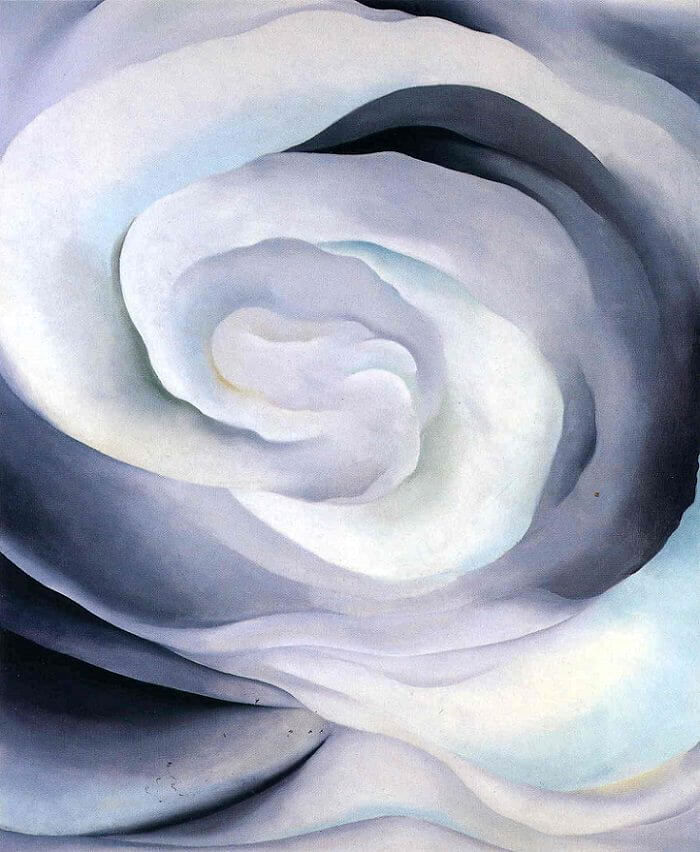
Approaching one of Georgia O'Keeffe's large paintings is to be immediately caught in a visual dilemma that has baffled viewers for decades. At first glance, the gaze encounters a botanical study of almost surgical precision: monumental petals, geometric centers, and raw lighting that dissects the anatomy of a flower with a scientist's coldness.
However, as the eye travels across the canvas, the composition curves, folds in upon itself, and acquires an intimacy so dense and fleshy that it becomes physically impossible not to cross the mental line toward the representation of desire and human anatomy. Were we looking at an exercise in pure botany, or a bold visual transgression?
For most of the 20th century, the art world unanimously chose the second option. And thus began one of the most fascinating silent battles in modern cultural history.
The Trap of Scale: Making the Invisible Visible
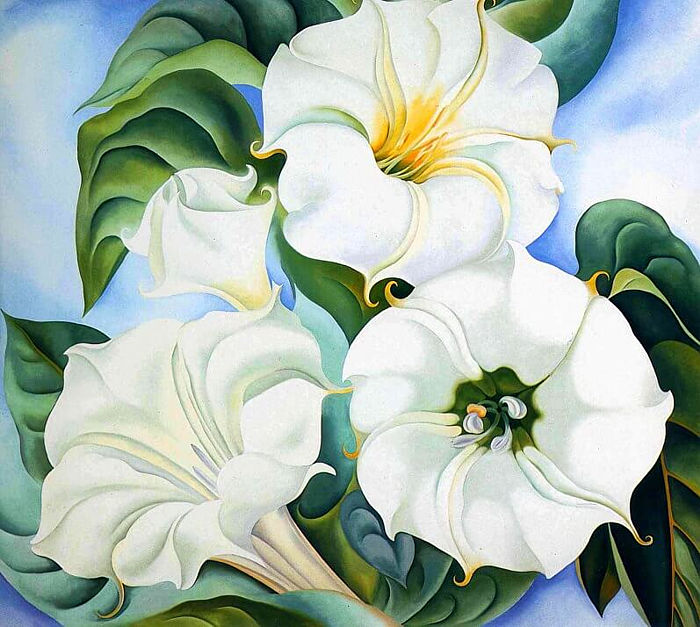
To understand the O'Keeffe phenomenon, one must first understand the impact of her method. In the 1920s, New York was shaking with the dizzying pulse of modernity. Skyscrapers reached for the sky, industrialization devoured the landscape, and the urban rhythm became frantic. In the middle of that metallic chaos, Georgia O'Keeffe decided to do the exact opposite of what the era dictated: she stopped to look at a flower.
But she didn't do it like any traditional impressionist or landscape painter. O'Keeffe enlarged the object to titanic proportions, turning a tiny poppy or wild lily into an architectural-scale canvas. On one occasion, she explained the reason behind this decision with crushing, down-to-earth logic:
"I made you take time to look at what I saw and when you took time to really notice my flower you hung all your own associations with flowers on my flower and you write about my flower as if I think and see what you think and see of the flower—and I don't."
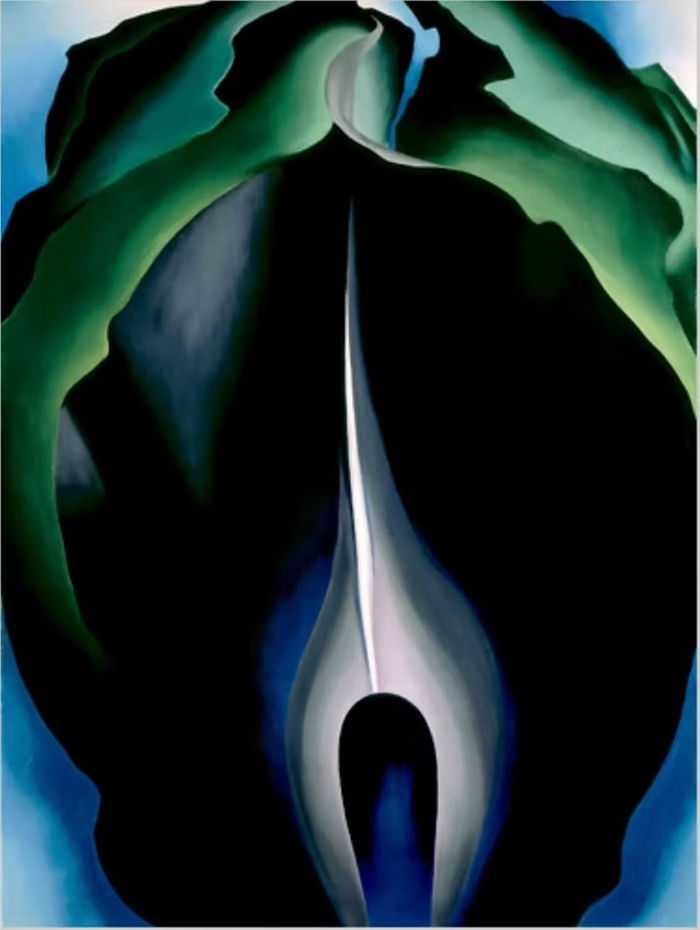
By forcing the viewer to confront a petal the size of a door, O'Keeffe achieved a hypnotic effect. She stripped the flower of its natural context—the garden, the stem, the earth—and transformed it into an abstract landscape of curves, shadows, and textures. By eliminating distance, the observer no longer looked at the flower; they found themselves trapped inside it.
Psychoanalysis Takes the Brush: The Storm of Abstract Vulvas
The problem—or the blessing, depending on how you look at it—was that the cultural context in which these works emerged was deeply permeated by Freudian psychoanalytic theories. Society was gripped by a collective obsession to decipher hidden symbols, repressed instincts, and latent sexuality in every corner of visual culture.
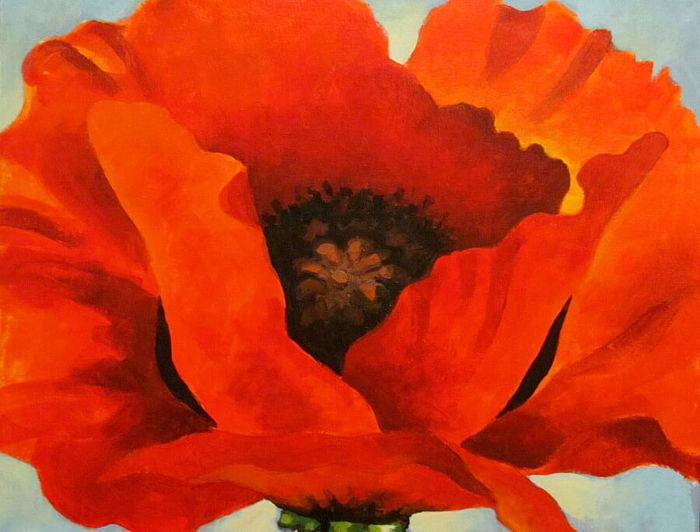
When the art criticism—mostly men linked to the New York avant-gardes—stood before these enormous floral openings with fleshy centers and shadowy depths, they thought they saw a revelation. To them, there was no ambiguity: the velvety folds and central abysses were a subconscious, erotic representation of the female vulva. Critics of the stature of Alfred Stieglitz—who was not only her dealer and mentor, but also her husband—sometimes indirectly fueled this reading that linked the work to a sort of erotic liberation for women.
The feminist movement of the 1970s would ultimately embrace this interpretation with fervor. For later artists and theorists like Judy Chicago, O'Keeffe's paintings represented a foundational milestone: the reclamation of the female body and its centralized iconography as a legitimate territory of artistic expression, far removed from the complacent gaze of traditional patriarchy.
A myth had been forged: the mother of American modernism was actually a silent subversive painting female sexuality in broad daylight, hiding it in plain sight under the harmless disguise of botany.
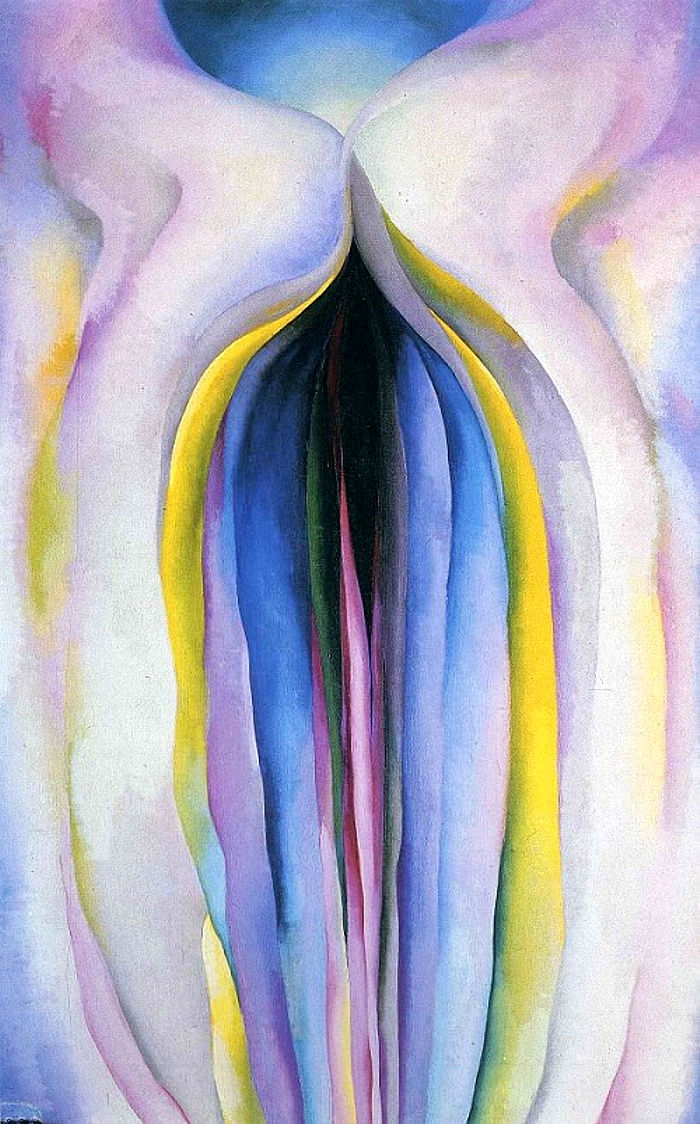
The Creator's Fury: Absolute Rejection of the Cliché
There was only one minor issue with this entire narrative constructed by the critics: Georgia O'Keeffe detested it with every fiber of her being.
Whenever a critic or journalist approached her with a knowing look to question the supposed sexual symbolism of her paintings, the artist's response was a wall of ice as relentless as the landscapes of New Mexico she so loved. O'Keeffe denied the reading over and over with a mix of annoyance and cutting elegance. For her, critics were projecting their own repressed obsessions onto her work, incapable of conceiving that a woman could paint something monumental without it having a sexual connotation.
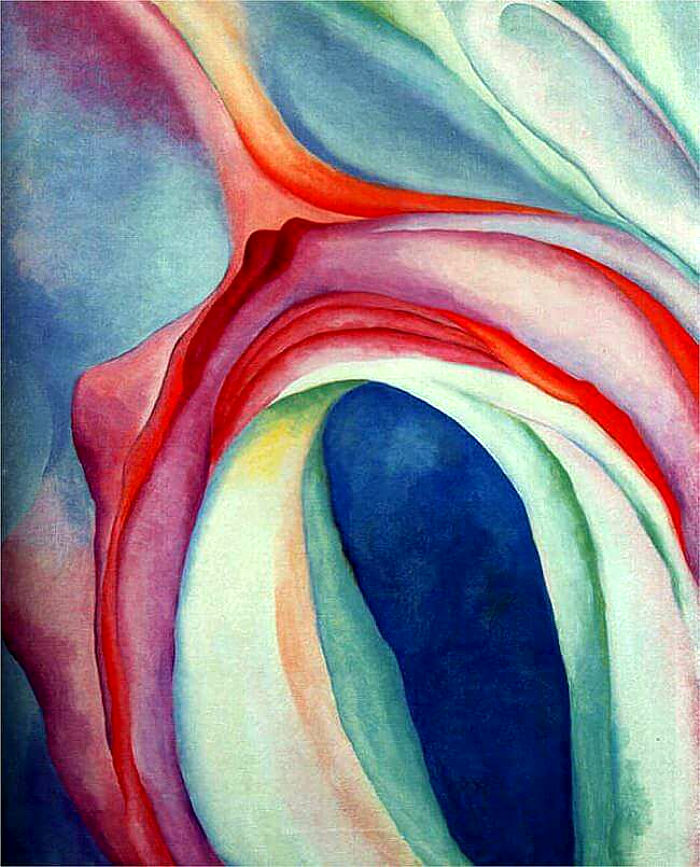
“You write about my work as if I thought and saw what you think and see of the flower, and I don't,” she would express with absolute forcefulness in the institutional texts accompanying her exhibitions.
To O'Keeffe, a petal was simply a petal. Lines were visual rhythms; colors were explorations of light under the unforgiving sun of the desert. She felt that reducing her rigorous formal study, her obsession with composition, and her deep respect for nature to a simple anatomical reading was an intellectual disrespect. In her mind, men had created a convenient theory to explain something that exceeded their understanding: a woman's ability to master pictorial space on a monumental scale without asking permission from academic tradition.
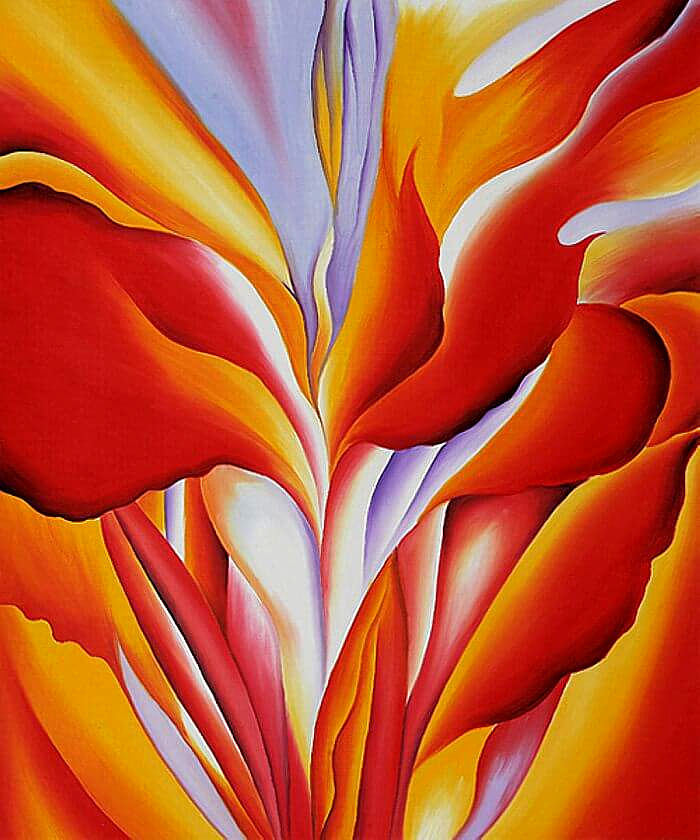
The Viewer's Mirror: Who Was Looking at Whom?
This collision between the creator's intention and the voracity of interpretation generates one of the richest reflections on the psychology of art today. Who was right? The painter who demanded to be read in strictly formal terms, or the public that found in those floral abysses a mirror of their own drives?
In the field of art, an author's intention does not close off its meaning; often, it is merely the starting point. O'Keeffe's involuntary—or perhaps perfectly calculated—genius lay in creating an ambiguity so powerful that the canvas became a cultural Rorschach test.
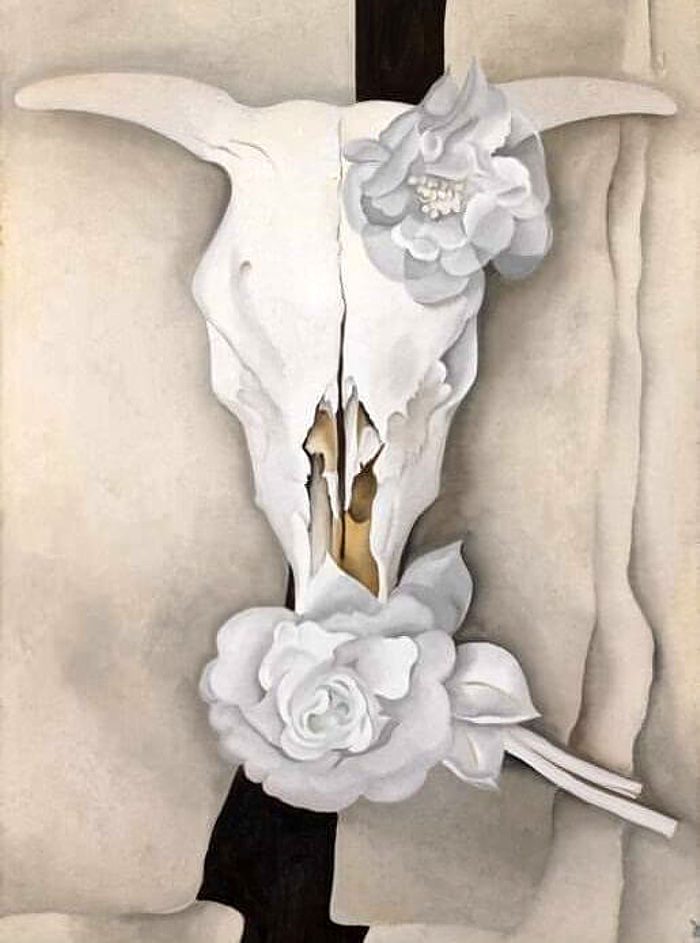
By cropping the landscape and isolating the detail, O'Keeffe forced the viewer to abandon the comfort of distance. She took away our usual points of reference. Without a horizon, stems, or leaves to guide us, the human eye enters a territory of uncertainty. And in that uncertainty, the mind desperately seeks familiar anchors. If the viewer carries a load of erotic symbolism, they will see flesh and desire; if they seek the purity of nature, they will see geometry and light. The flower had truly become a mirror.
Beyond the Controversy: An Indelible Legacy
Over the years, Georgia O'Keeffe's figure managed to transcend the reductionist dichotomy between "flowers or vulvas." Her legacy is that of a woman who built an utterly unique visual identity, eradicating the boundaries between abstraction and figurative art long before the art market knew how to classify her.
She left behind the bohemian circles of New York to voluntarily exile herself in the desert of New Mexico, where bleached animal bones, eroded rocks, and the infinite horizon became her new and solitary models. There she continued painting with the same ironclad discipline, completely ignoring the trends, currents, and opinions of a critics' circle that never truly understood her.
Perhaps, in the end, the answer to the enigma was given by herself indirectly in her exhibition brochures, dismantling the projections of her era with elegance: she made us take the necessary time to look at what she saw, only to remind us that when we contemplate a work of art, the only thing we are truly doing is observing the reflection of our own desires. And in that territory, mystery will always be far more interesting than certainty.