

Imagine a spring afternoon in a quiet corner of the French countryside. The sun shines gently through the branches of the trees, and a light breeze makes the leaves whisper ancient songs of nature. It is in this idyllic setting that Pierre Auguste Cot invites us to step into his painting, "Spring."
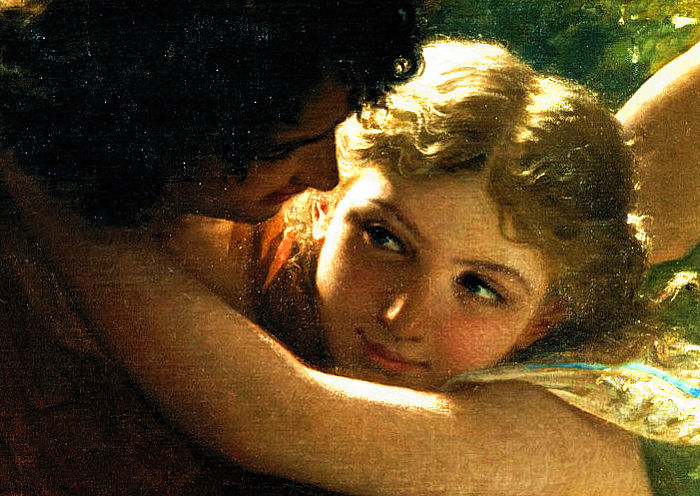
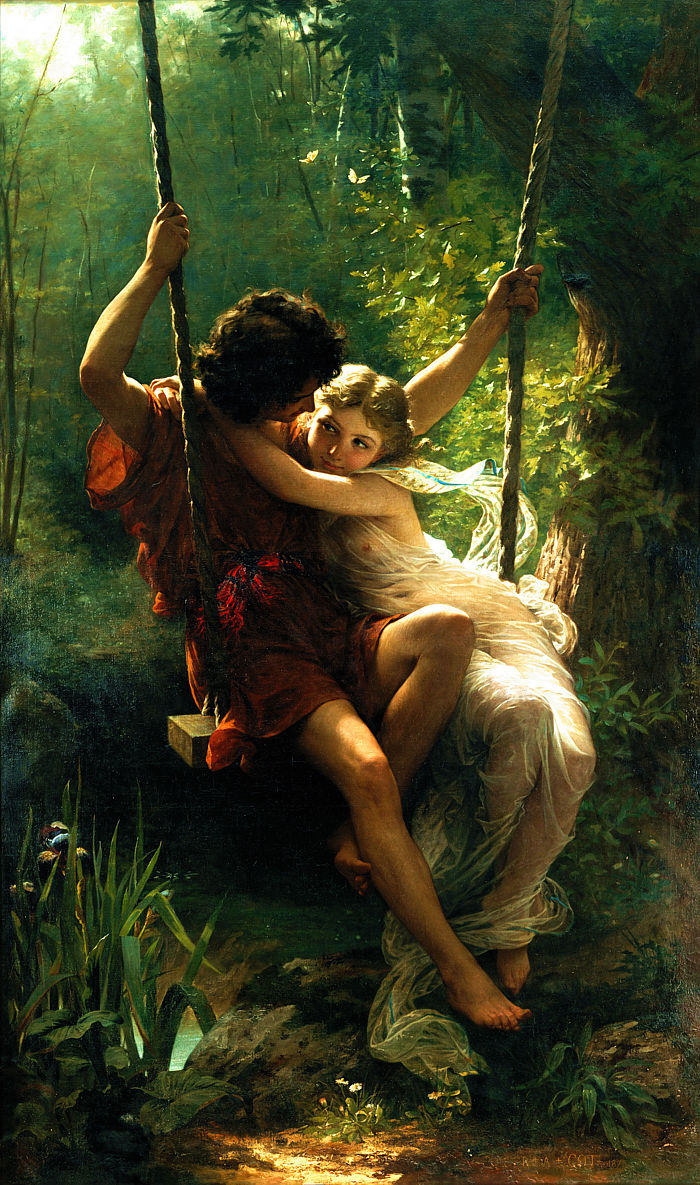
At the center of the painting, like something out of a dream, we see two young lovers. They are sitting on an improvised swing made of branches and flowers, captured in a perfect moment of pure joy and love. The young woman, with her loose, wavy hair, clings to the man, laughing softly, as if the entire world were nothing more than a backdrop to their happiness.
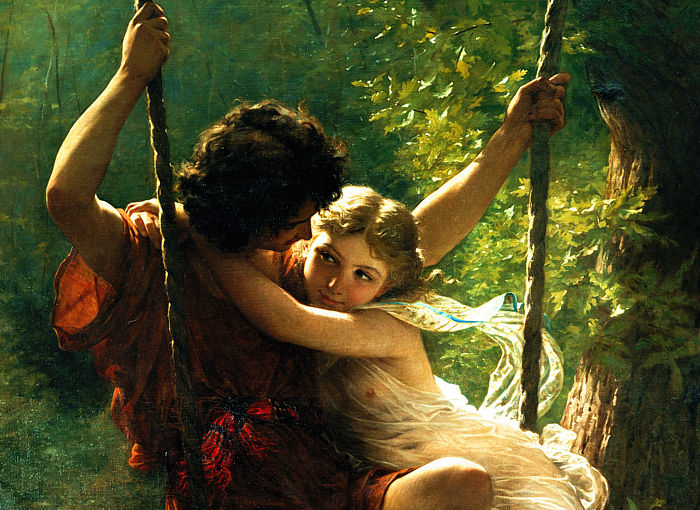
The man, for his part, gazes at her with a mixture of admiration and tenderness. With one strong arm, he wraps it around his beloved's waist, making sure she is safe as they swing. His posture is protective, yet playful, as though he enjoys the moment just as much as she does. Their connection is palpable; their intertwined gazes speak of a deep understanding, the kind that seems to exist only in the early days of love.
The young lovers' clothes are light and airy, perfect for a spring afternoon. Their soft colors and flowing fabrics create a sense of constant movement, as if the breeze might carry them away at any moment. The young woman wears a white dress, almost translucent, reflecting the purity and freshness of their love. The man, dressed in a warm-toned tunic, complements the scene perfectly, with both figures in harmony with the natural surroundings.
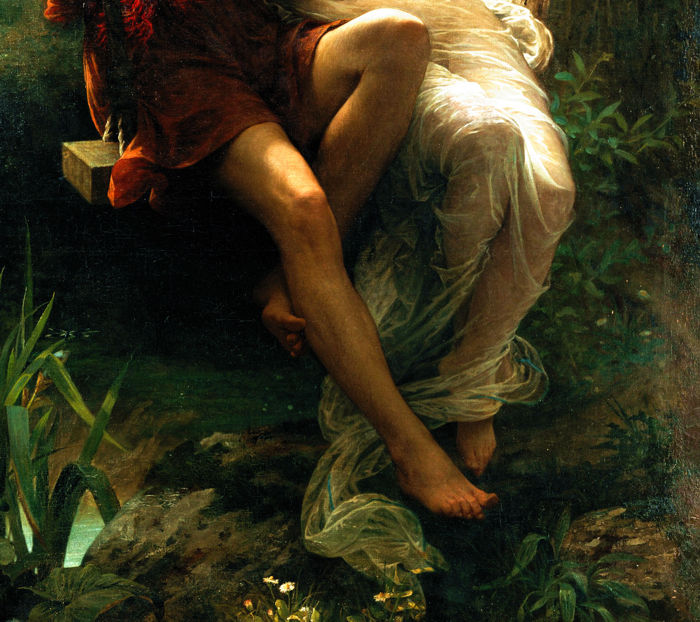
And it is precisely this setting that adds another layer of magic to the scene. The tall, leafy trees form a kind of natural canopy, shielding the lovers from the rest of the world. It is as though nature itself were conspiring to give them a moment of intimacy, a space where their love could blossom without interruption. The flowers scattered across the ground and woven into the branches of the swing seem like an extension of the young woman's dress, blending her even more deeply into the landscape.
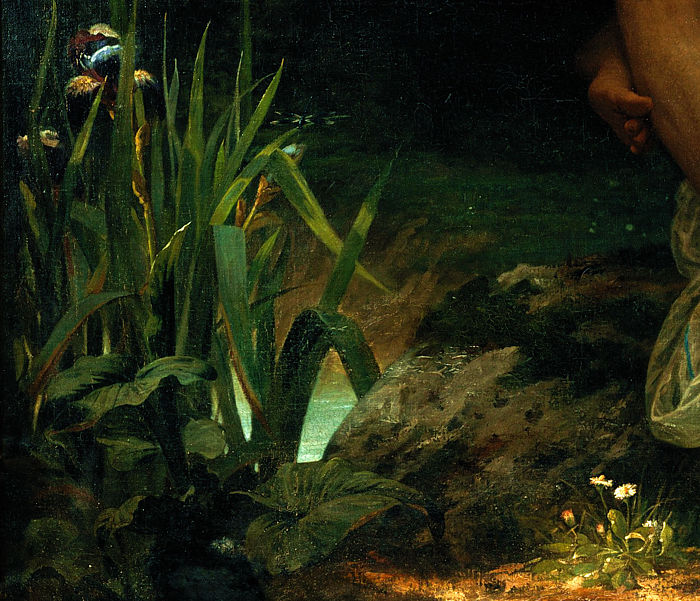
The colors of nature in this painting are vibrant without being overwhelming. The greens of the trees and grass, the pink and yellow hues of the flowers—all are in perfect harmony. Sunlight filtering through the leaves creates patches of light and shadow that dance across the lovers, adding a sense of movement and life to the scene. It is as though everything were constantly changing while remaining suspended in an eternal moment.
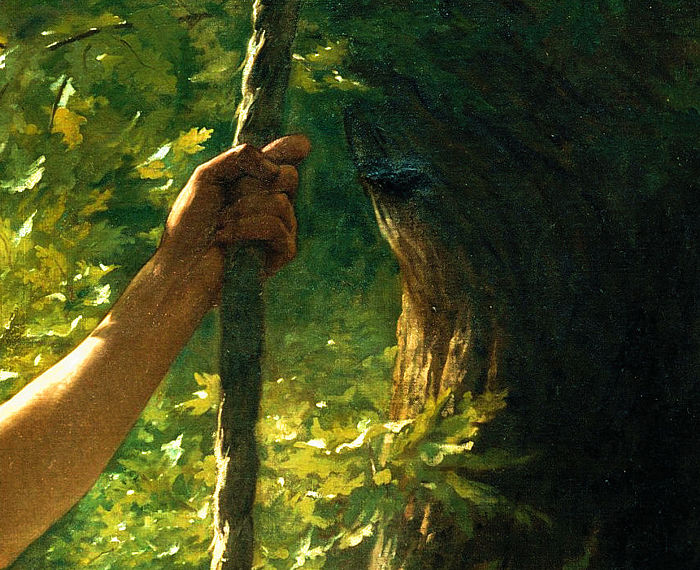
Cot's technique is subtle and detailed. He does not simply capture the appearance of things, but also their essence. Notice how he has painted the leaves, each with its own shape and shadow, creating a sense of depth and realism. The flowers are not mere dots of color, but tiny works of art in their own right, each carefully rendered to add texture and beauty to the scene.
Beyond his technical skill, however, what truly makes "Spring" special is the emotion it conveys. There is simple, genuine joy in the young woman's laughter, and a sense of freedom and carefree abandon in the way the lovers swing. The painting reminds us of those fleeting moments of happiness we have all experienced, those instants when everything seems possible and the world feels like a wonderful place.
As we look at the lovers, we can almost hear the rustling leaves, the gentle creaking of the swing, and the distant song of birds. Cot has masterfully created a world that offers us a refuge where we can escape, if only for a moment, from our everyday worries.
Through the simplicity of this painting, Cot reveals the beauty of life's little moments, of the details we so often overlook. He invites us to pause and appreciate the magic of spring, the rebirth of nature, and the promise of new beginnings. Above all, he reminds us of the joy of young love, the kind of love that makes us feel alive and filled with hope.
Thus, Pierre Auguste Cot's "Spring" is not merely a work of art, but a celebration of life and love. It is a tribute to those moments when we feel most connected to ourselves and to the people we love. Through his brush, Cot invites us to remember and to dream, to find beauty in everyday life, and to cherish the moments of pure happiness that make life worthwhile.
In every brushstroke, every shadow, and every smile, we discover a story of love and nature, a song celebrating youth and joy. It is this combination of technique, emotion, and beauty that has made "Spring" such a beloved and admired painting, a treasure that transports us to a world where love and nature exist in perfect harmony.
THE ARTWORK
Spring
Pierre Auguste Cot
1873
Oil on canvas
Dimensions: 213.4 × 127 cm
The Metropolitan Museum of Art, New York