

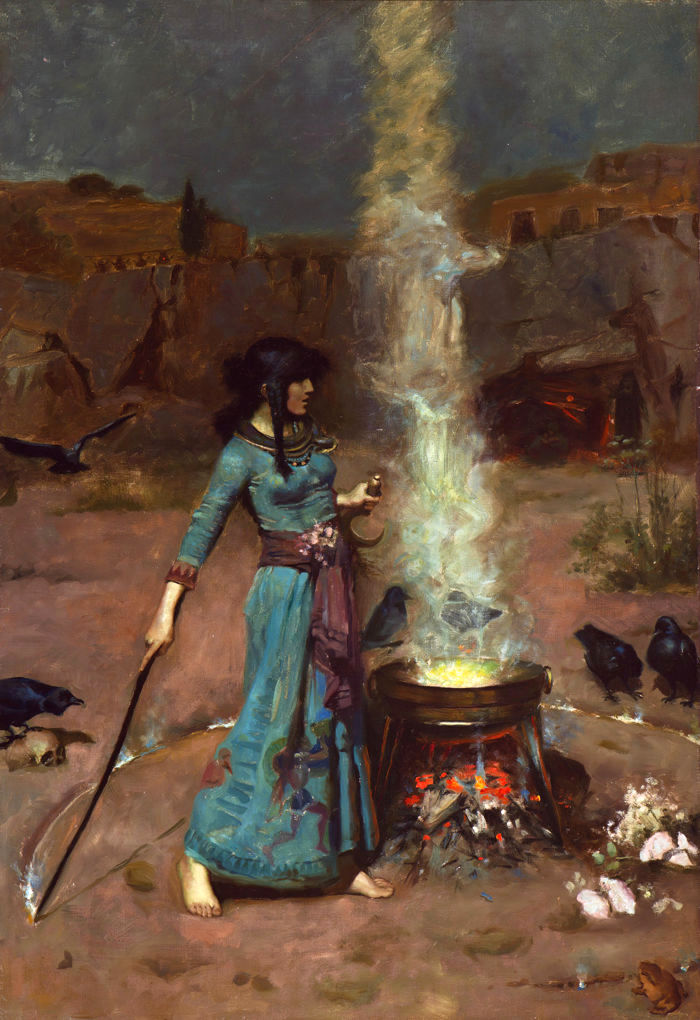
The Magic Circle is one of the most evocative and mysterious works by English painter John William Waterhouse, created in 1886. Waterhouse, known for his fondness for mythological and classical literary themes, captures a scene steeped in mysticism and enchantment that has intrigued and fascinated audiences since it was first shown.
Waterhouse painted The Magic Circle at a time when the Pre-Raphaelite movement, which had inspired him, had already given way to newer forms of artistic expression.
The Pre-Raphaelites sought a return to the spirituality, nature, and emotional intensity they believed had existed in art before Raphael. By the late nineteenth century, themes of witchcraft, paganism, and the occult were very much in fashion, fueled by a growing interest in folklore, mythology, and the rediscovery of ancient mystical practices.
Waterhouse, although not strictly a Pre-Raphaelite, shared with them a fascination for narrative and magical atmosphere that permeated their work. The Magic Circle, in particular, grew out of this cultural interest in the esoteric and the supernatural, capturing the image of a sorceress in the middle of a ritual.
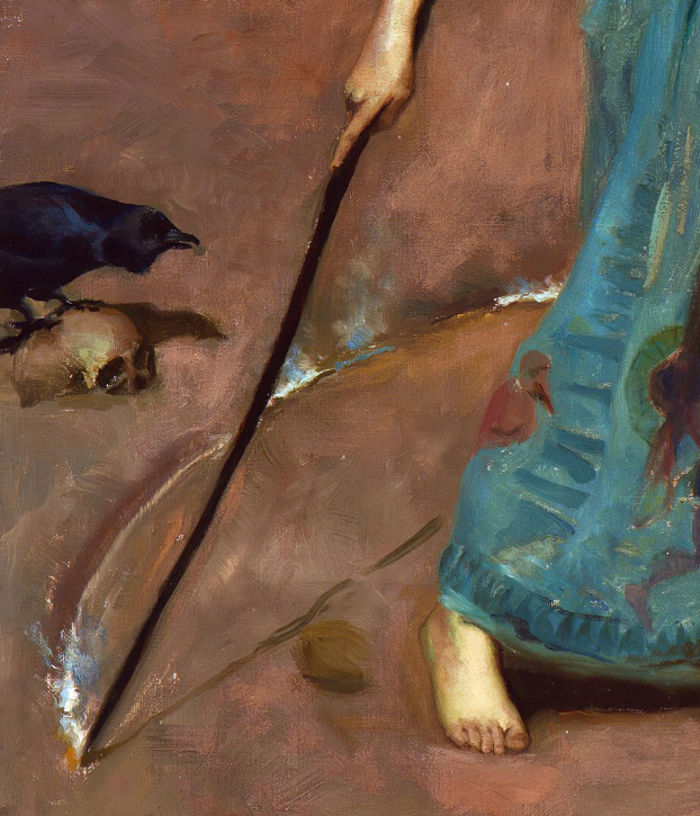
The painting shows a powerful, enigmatic woman at the center of the scene. Dressed in a dark robe adorned with gold details, she is surrounded by a somber, dense atmosphere. She holds a wand, with which she traces a circle of fire on the ground, an act of ancient protective magic. This circle, known as the "magic circle," was a symbolic tool used in witchcraft rituals, meant to protect the practitioner from malevolent energies and to concentrate power.
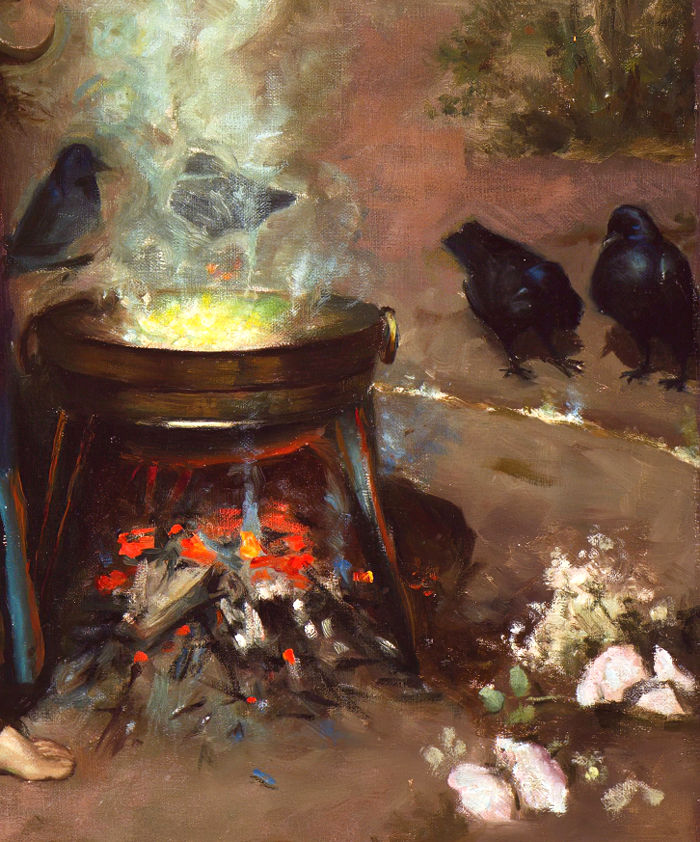
The sorceress, who may represent a mythological figure such as Circe or an anonymous priestess, has a focused, serene expression. Around her, black birds — likely ravens — watch over the ritual, deepening the sense of mystery and suggesting some connection to the spell being cast. In the background, elements of nature can be made out: mountains, gnarled trees, and oversized plants. The whole setting seems steeped in an ancient, primal energy.
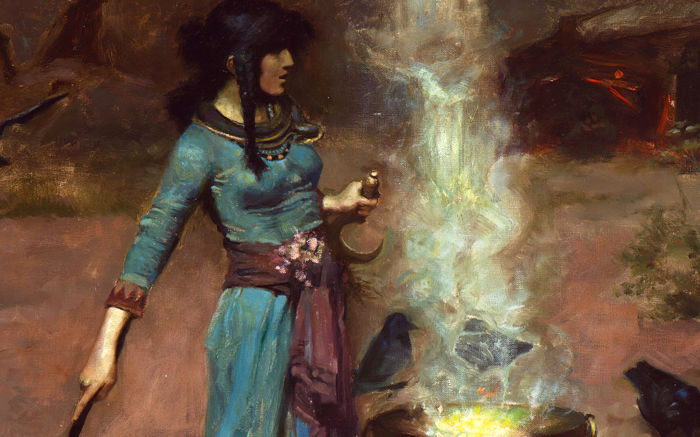
Waterhouse pays close attention to detail, from the sorceress's accessories to her hairstyle and pose, each suggesting a deep knowledge of magical practices and hinting at a figure of real power. The way nature is rendered around her — tangled and mysterious — reinforces the sense that we are witnessing a ritual charged with hidden power.
Symbolism
The Magic Circle contains a range of symbols that speak to the role and representation of women as figures of power. The sorceress embodies an archetype that fascinated Waterhouse throughout his career: the mystical, powerful, unattainable woman. She is surrounded by nature and appears to be its guardian, a manifestation of feminine power and hidden wisdom.
The circle of fire is a primal symbol in esotericism, standing for protection, purification, and the channeling of energy. By drawing this circle, the sorceress marks a boundary between the profane and the sacred, between the earthly realm and the spiritual world. Fire is both a source of light and of destruction, a symbol of power and transformation, suggesting that the ritual underway could serve either benevolent or destructive ends.
The ravens, birds associated with death, mystery, and wisdom in many cultures, act as the sorceress's guardians. They reinforce her connection to death and the beyond, hinting that she commands not only natural forces but spiritual ones as well.
Influences
Waterhouse was known for drawing on literature, mythology, and folklore in his work. Although The Magic Circle is not based on a specific text, the sorceress in the painting is thought to be inspired by mythological figures such as Circe or Medea, powerful women feared for their magical abilities and their capacity to shape the fates of those around them. In several of his works, Waterhouse explores similar figures, portraying women of great strength and presence, capable of altering the natural order through arcane knowledge.
The fascination with witches and the occult was also part of a broader turn toward the supernatural in Victorian England. It was a period of spiritualist revival, and the idea of mystical, powerful women fit naturally into a society that was beginning to explore new roles and rights for women. Waterhouse's magical women embody this spirit of independence, autonomy, and power that was unusual for the era.
Cultural Impact
Although there are no specific anecdotes about the creation of The Magic Circle, the painting remains one of Waterhouse's most discussed and celebrated works, precisely because of the fascination its central figure inspires and the mystery surrounding her. It has been especially valued for its ability to evoke a story without telling us exactly what that story is, leaving room for viewers to speculate and build their own narrative around the central figure.
The Magic Circle's impact is also felt in modern culture. Its aesthetic and symbolism have been referenced in literature, film, and contemporary art, particularly within the fantasy genre. The image of a sorceress drawing a circle on the ground has been echoed and reinterpreted across numerous visual and narrative works, turning this figure of female power into an icon of mystery and allure.
Waterhouse's Magic Circle continues to captivate audiences through its combination of detailed technique and profound symbolism. It represents a moment in art history when the supernatural and the mystical were deeply intertwined with the natural world, and it stands as a reminder of the richness and mystery of ancient spiritual traditions. The work offers a powerful depiction of the female figure in a dominant, power-laden role, an image that continues to resonate in modern representations of magic and spirituality.
In short, John William Waterhouse's The Magic Circle is a work that explores the essence of magic and mysticism through a female figure who personifies hidden wisdom and a connection to the spiritual realm. This sorceress, surrounded by fire and shadow, is at once an image of strength and of mystery, evoking humanity's enduring fascination with the unknown and the power that lies within the human spirit.
THE ARTWORK
The Magic Circle
John William Waterhouse
Date 1886
Technique oil on canvas
Dimensions height: 182.9 cm; width: 127 cm
Collection Tate Britain