

Leonardo da Vinci is one of the greatest geniuses humanity has ever produced. Although his legacy spans multiple disciplines such as science, anatomy, engineering and botany, it was in art that he achieved undisputed immortality. His ability to capture the essence of humanity, combined with flawless technical mastery, places him among the greatest artists of all time.
He was born in 1452, on the outskirts of Vinci, a small town in Tuscany. He was an illegitimate child, and that closed the doors of the university and of the professions that others inherited. But he had something no degree could give him: a bottomless curiosity. From childhood he filled pages with questions nobody knew how to answer: why does a bird fly? How does the heart beat? What lies beneath the skin?
He lived in the Renaissance, a period marked by a renewed interest in the science, art and philosophy of Antiquity. As a teenager he was an apprentice in the workshop of Andrea del Verrocchio in Florence, where he learned drawing, painting, sculpture, mechanics and metalworking. Training in this environment exposed him to the innovative techniques of the era, but it also allowed him to forge his own style.
Around 1482 he left for Milan, to the court of Duke Ludovico Sforza. To introduce himself he wrote a letter offering portable bridges, weapons, cannons and siege engines; painting was mentioned almost at the end, as an afterthought. He wanted to be a military engineer, and art came later. He would spend about seventeen years in Milan.
Painting was one of the many ways in which Leonardo expressed his insatiable curiosity. For him, art was not merely a representation of reality, but a way of understanding it. His obsession with anatomical detail, light and perspective lifted his works beyond the limitations of his time.
Some of His Masterpieces Are Pillars of Universal Painting
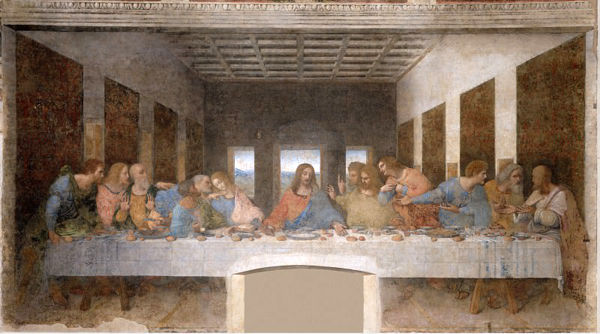
The Last Supper (1495-1498)
This mural, painted in the convent of Santa Maria delle Grazie in Milan, is one of Leonardo's most emblematic creations. It depicts the moment when Jesus announces that one of his disciples will betray him. What is remarkable about this work is not only its religious theme, but the way Leonardo captured human emotions: surprise, doubt, guilt and fear are masterfully rendered in the faces and postures of the apostles.
Leonardo used an experimental technique, applying tempera and oil on dry plaster, which unfortunately led to conservation problems from very early on. Even so, "The Last Supper" remains a testament to his compositional genius, particularly in the use of linear perspective to draw attention toward Christ as the center of the scene. During those same years in Milan he began modeling a giant bronze horse, more than seven meters tall, which was never cast: when the French invaded the city, the clay model was destroyed.
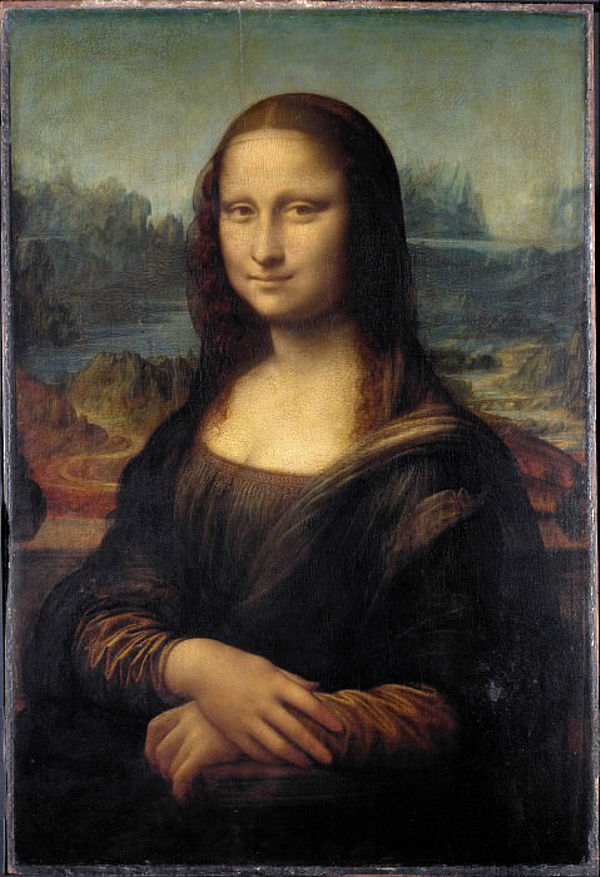
The Mona Lisa (c. 1503-1519)
Probably the most famous painting in the world, the "Mona Lisa" embodies the Renaissance ideal of artistic perfection. Also known as "La Gioconda," it is a portrait of Lisa Gherardini, although some suggest it may carry deeper or symbolic meanings. Leonardo worked on it for years, perhaps more than a decade, retouching a shadow, a smile, a detail of the landscape. He never delivered it: he took it with him to France, where he spent his last years as a guest of King Francis I.
The use of sfumato, a technique Leonardo perfected to soften the transitions between colors and tones, gives the Mona Lisa an ethereal and enigmatic quality. Her subtle smile has been the subject of speculation for centuries, becoming a cultural icon that transcends time. In addition, the blurred landscape in the background adds to the aura of mystery.
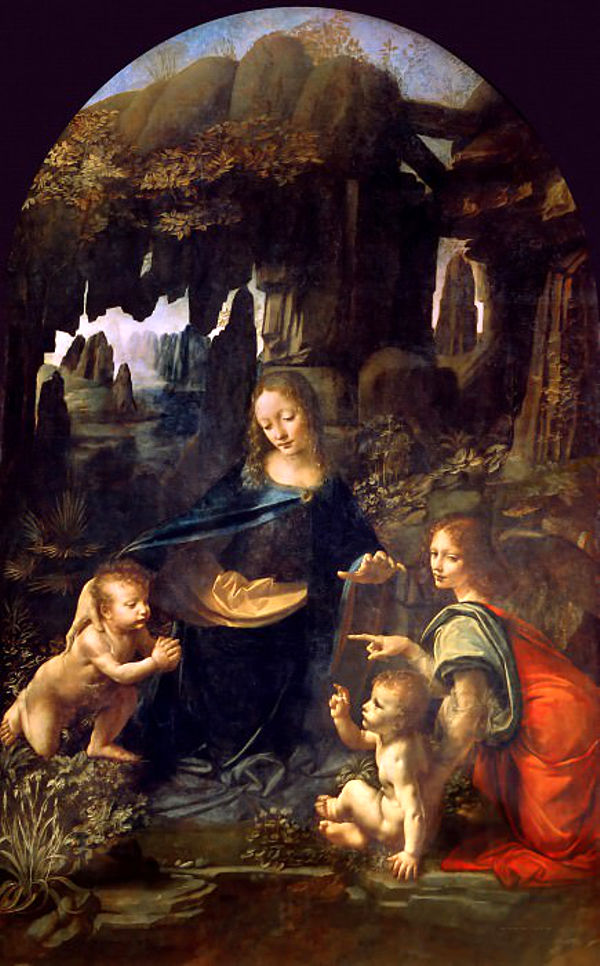
The Virgin of the Rocks (1483-1486)
This work, created in two versions, stands out for its complex composition and symbolism. It depicts the Virgin Mary with the Christ Child, John the Baptist and an angel in a rocky setting. The atmosphere is mysterious, with an innovative use of light and shadow to give depth and realism to the scene.
Leonardo used this painting to explore not only the spiritual relationship between the figures, but also his obsession with landscapes and botany. Every plant and rock formation is carefully detailed, showing his scientific interest.
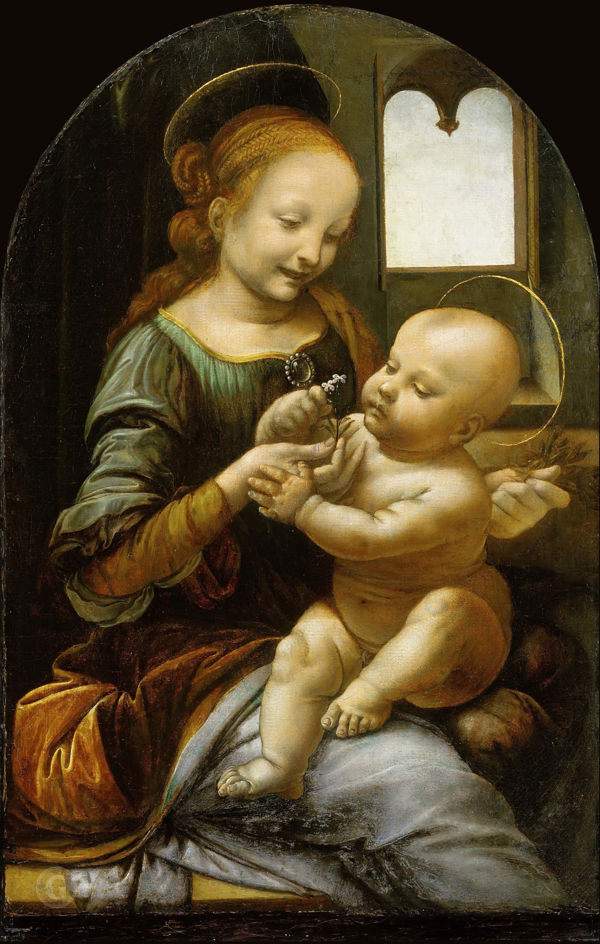
Benois Madonna (1481)
Leonardo's Legacy
Leonardo was a pioneer in the use of sfumato, a technique that allows a gradual transition between tones and colors, creating a more realistic and three-dimensional appearance. This is evident in all his major works, where the edges of the figures seem to merge with their surroundings.
Chiaroscuro, the contrast between light and shadow, was also essential in his work. Leonardo used this device to give volume to his figures and to create a visual drama that captivates the viewer.
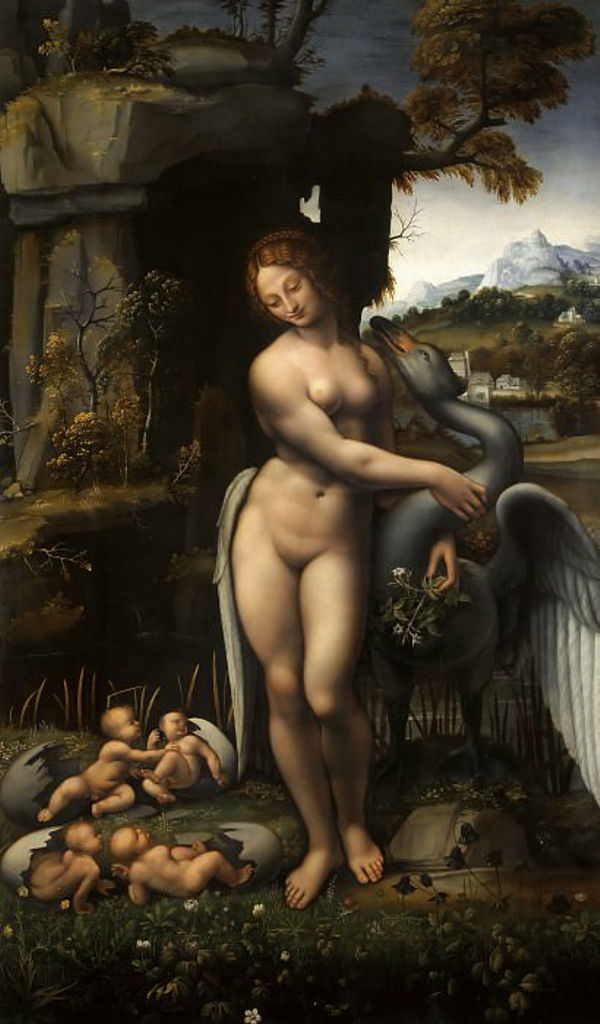
Leda and the Swan (Francesco Melzi) 1508-15
His mastery of perspective allowed him to create visually striking compositions, and it is also present in his sketches, where he experimented with architecture and geometry. His method was always the same: observe until exhaustion, draw what he saw, ask why, and draw again. For Leonardo, drawing was not decoration, it was his way of thinking.
Much More Than a Painter
As we mentioned earlier, although his pictorial legacy is monumental, Leonardo was much more than a painter. His notebooks, of which more than 7,000 pages survive (and everything suggests that many more were lost), are full of anatomical studies, diagrams of flying machines and scientific observations that reveal a restless, multidisciplinary mind.
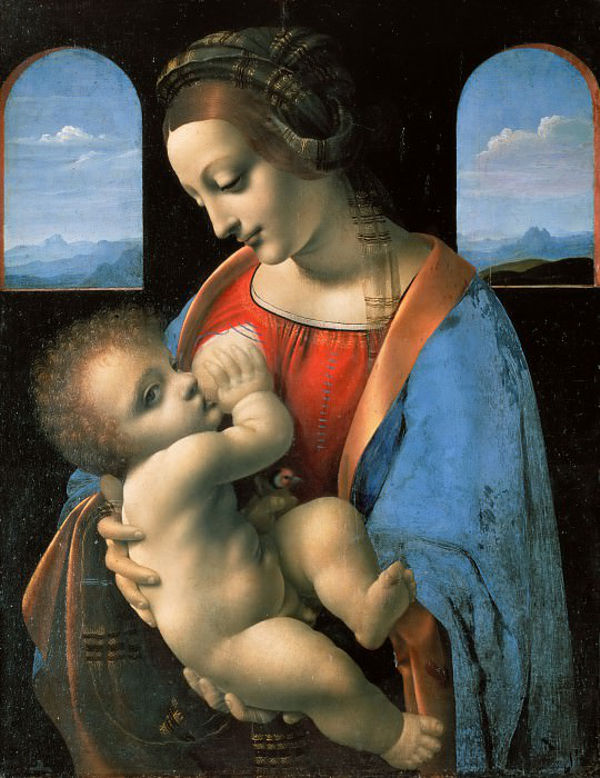
Madonna Litta c.1490-91
Anatomy and art. Leonardo dissected corpses to understand human anatomy, which allowed him to represent the body with unprecedented precision. He drew muscles, bones, the heart and even a fetus in the womb. Once, in a hospital in Florence, he opened the body of a man more than a hundred years old who had died without being ill, only weak, to find out what a person dies of in such a case. He recorded what he saw: narrow, hardened arteries, one of the earliest known descriptions of what we now call arteriosclerosis. These studies not only benefited his art, but also contributed to the medical knowledge of his time. To this drive to understand the proportions of the body belongs the Vitruvian Man (around 1490), the figure inscribed in a circle and a square that the whole world knows today.
Engineering and inventions. He designed futuristic machines: an aerial screw, a precursor of the helicopter, an armored vehicle with cannons pointing in every direction, a mechanical knight moved by pulleys and cables, a diving apparatus and movable bridges. Although almost none were built in his time, some of them work: in the year 2000, a skydiver jumped from about 3,000 meters with a parachute built from one of his drawings and landed safely.
Science and nature. Leonardo saw art and science as two sides of the same coin. His attention to detail in the depiction of plants, rocks and natural phenomena reflects his fascination with the world around him. For years he drew whirlpools, currents and waves, trying to understand how what no one could catch moved.
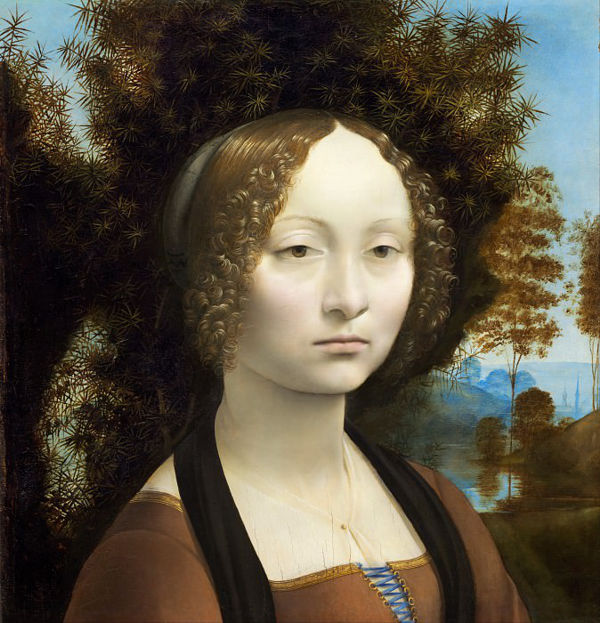
Ginevra de' Benci c.1474-76
Leonardo da Vinci transformed painting, raising it to a level of depth and expression that few have matched. His emphasis on direct observation, combined with his technical skill and creativity, made him a central figure of the Renaissance. He worked for kings and dukes, for the Pope and for the Pope's enemies: in 1502 he served as military engineer to Cesare Borgia, and back in Florence he received the commission to paint a great battle in the Palazzo Vecchio. They say he left works unfinished and exasperated his clients, but it was not carelessness: while he was painting one picture, his mind was already solving the next mystery.
His works, though few in number, continue to be studied and admired by artists, historians and art lovers around the world. Leonardo did not merely paint; he redefined what it means to be an artist, integrating science and philosophy into his practice.
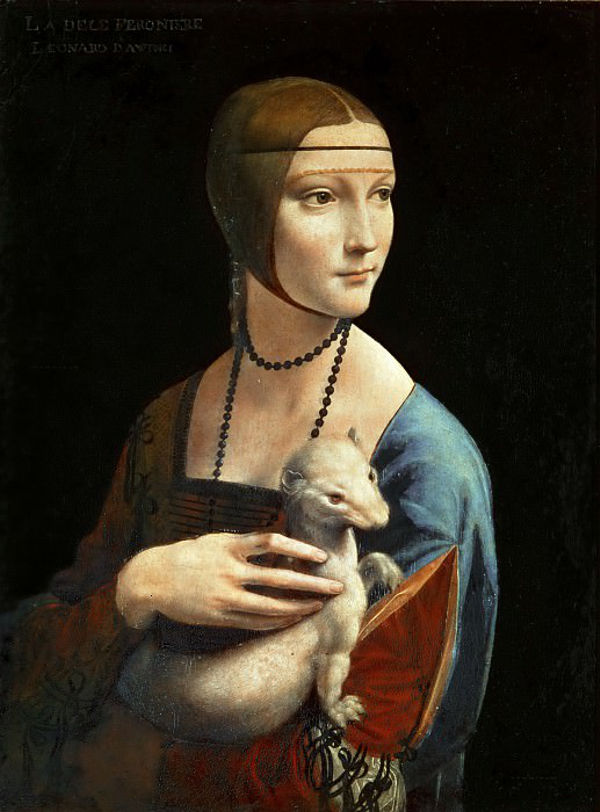
Lady with an Ermine 1488~90
He died in 1519, at the age of 67, with more unfinished projects than completed works; the man who could do everything never believed he had done enough. And yet, five centuries later, the Salvator Mundi, attributed to Leonardo, sold for 450 million dollars, the highest price ever paid for a work of art. Today, his influence extends beyond art, inspiring those who seek to understand and represent the world with a mix of curiosity and skill. His name symbolizes not only artistic talent, but also the human capacity to dream and innovate.
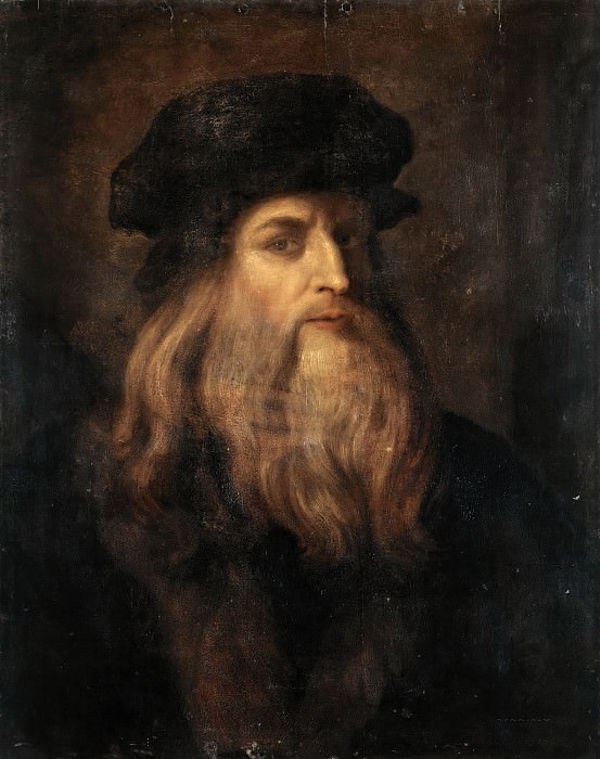
Leonardo da Vinci is an eternal reminder of what the human spirit can achieve when it combines passion, creativity and discipline. His artistic work, especially his painting, remains a beacon of inspiration, a doorway to a past that still illuminates our present.