

The day was gray and heavy, as if even the sky mourned what was about to happen. Lady Jane Grey, a young woman of barely seventeen who had been proclaimed Queen of England for a brief and turbulent nine days, sat alone in a small stone cell in the Tower of London. Her slender, fragile figure was wrapped in a simple white dress, a symbol of purity that contrasted sharply with the darkness of the walls around her.
She had spent the night in prayer, whispering words to the God who had guided her life. She was a learned girl, more educated than many of her time, but her intelligence and faith had not been enough to save her from the political intrigues that had turned her, unwillingly, into a pawn in the power struggle between her family and the crown.
In the distance, the murmurs of the guards could be heard. Her husband, Guildford Dudley, had been executed that very morning, and the news had reached her as a sepulchral silence that said everything. Jane had asked to say goodbye to him, but that small mercy had been denied. Now she was alone, facing the fate others had decided for her.
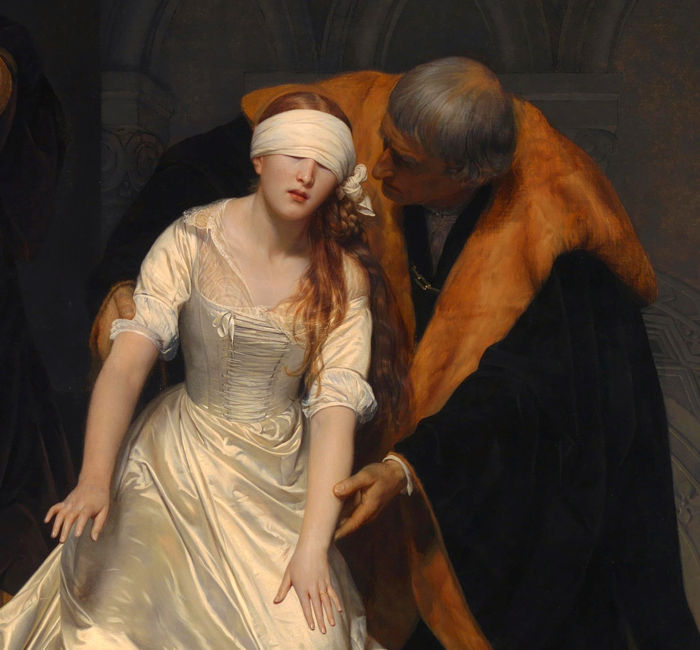
When the door of her cell opened, the Lieutenant of the Tower, Sir John Brydges, entered. His face showed a mixture of compassion and duty. With a respectful gesture, he indicated it was time. Jane rose with a calm that surprised even the veteran officer. Her hands, trembling yet steady, held a small prayer book.
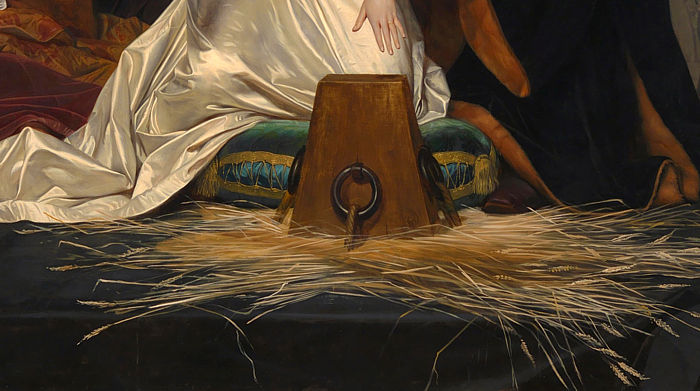
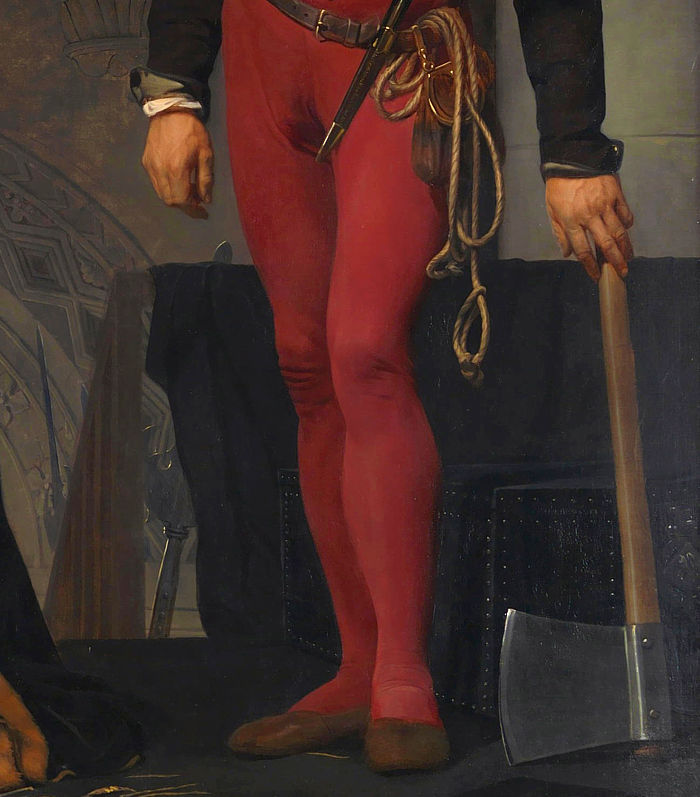
The walk to the scaffold was brief, but every step echoed in Jane's heart like an eternal echo. She climbed the wooden stairs with Brydges' help, and there stood the executioner, a shadowy, silent figure with his face covered. The polished wooden execution block seemed to wait patiently for its turn in the drama.
Jane turned to the small crowd that had gathered, mostly soldiers and a few court officials. "I hope to be saved by mercy," she said in a clear voice that resonated in the air like a hymn. "I am not guilty of having taken the throne, but I accept my fate in the hope that my death may serve the good of this kingdom."
With these words, she knelt before the block. Sir John offered her a blindfold. Jane accepted it, but as soon as it covered her face, she reached out blindly, searching for the wooden block. "Where is it?" she asked quietly, her tone laden with a vulnerability that broke the hearts of those who heard her. Brydges, gently, took her hands and guided them to the spot.
She settled slowly, whispering the words of a psalm. The executioner, silent and steady, took up his axe and took his position. There was a moment of absolute silence, in which time seemed to stop, as if the entire world were holding its breath.
And then, in a single stroke, it was all over.
Jane's body was handled with care, wrapped in simple cloth and carried to its final resting place. In the air lingered a sense of loss — not only of a young life, but of a spirit that had shown unexpected courage in its final moments.
The Tower of London, witness to countless tragedies, became on that day the stage for a story that would resonate through the centuries. Lady Jane Grey, the Nine Days' Queen, died not as a political figure, but as a young woman full of faith, dignity, and a fortitude few could have imagined.
Her legacy lives on, not in thrones or palaces, but in the lessons she left behind: strength in the face of adversity, acceptance of fate, and the beauty of a soul that, even in its darkest moments, remained luminous.
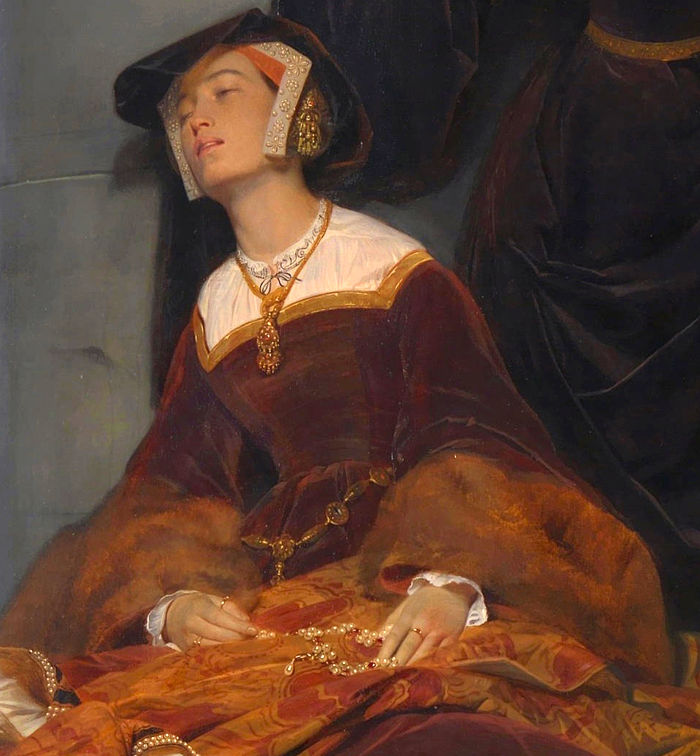
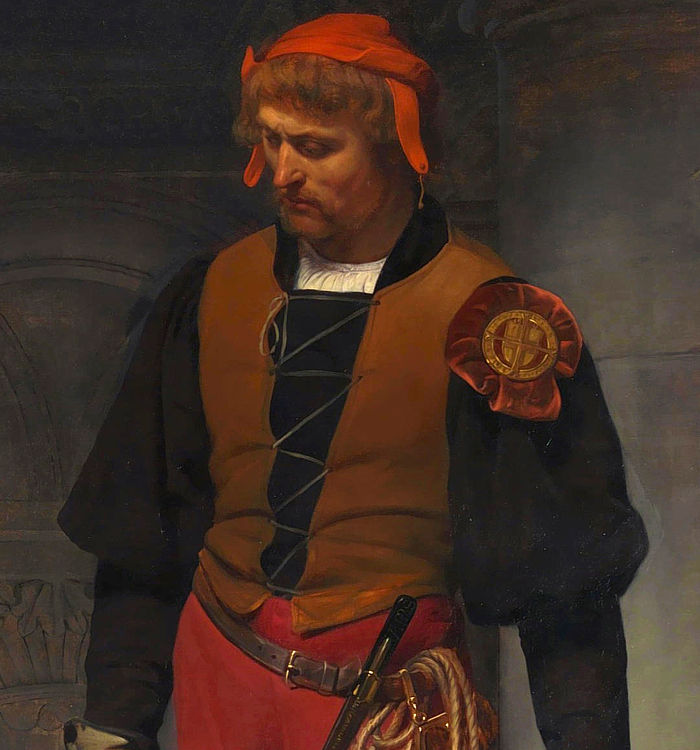
Delaroche's painting captures the culminating moment of this historic tragedy. In a dark, somber chamber representing the Tower of London, Lady Jane is shown wearing a delicate white dress symbolizing her purity and innocence. Her eyes are blindfolded, and her trembling hands grope for the execution block. Beside her, Sir John Brydges, the Lieutenant of the Tower, assists her with a mixture of compassion and duty, guiding her hands toward the spot where her head will rest. Jane's expression reflects a combination of fear and resignation, while the executioner, standing and dressed in red, waits solemnly to carry out his task.
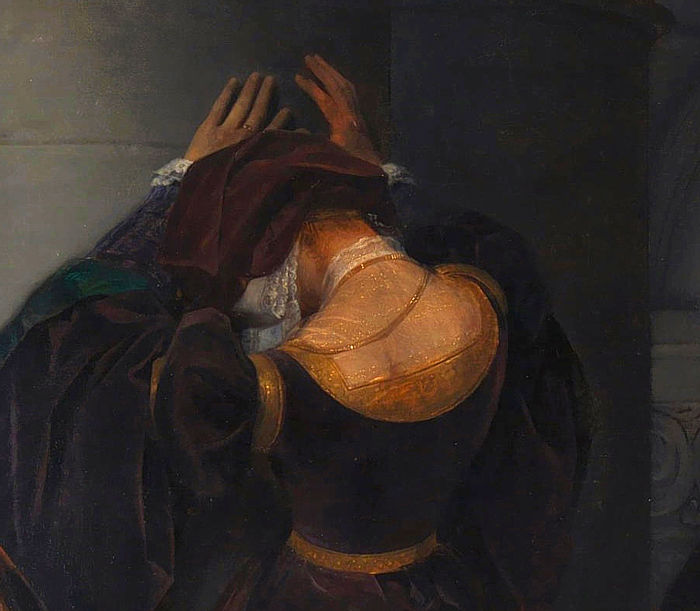
The composition of the work is meticulous. Delaroche uses contrasts of light and shadow to emphasize Jane's innocence against the darkness of her fate. The use of dark tones in the background highlights the central figure of Lady Jane, lit in a way that almost seems to radiate light of her own. This technique not only draws the viewer's attention to the protagonist, but also evokes a sense of imminent tragedy.
When "The Execution of Lady Jane Grey" was first exhibited at the Paris Salon of 1834, it made a significant impact. The public and critics alike were struck by Delaroche's ability to convey deep emotion and by his skill in recreating such a moving historical event with precision. However, it was not free of criticism. Some, such as writer and critic Théophile Gautier, questioned the scene's dramatization, suggesting it appealed too strongly to the viewer's emotions. Despite this, the work cemented Delaroche's reputation as one of the leading painters of his time.
The painting's own history is also worth noting. In 1928, a flood at the Tate Gallery in London severely damaged several works of art, and "The Execution of Lady Jane Grey" was believed to have been destroyed. However, in the 1970s, during a review of the museum's storage, the canvas was rediscovered and meticulously restored. Since then, it has been displayed at the National Gallery in London, where it remains one of the most admired pieces among visitors.
The Execution of Lady Jane Grey is a powerful reminder of how art can capture and preserve historical moments, conveying emotions and narratives that resonate across time. Paul Delaroche's mastery in depicting this tragic episode invites us to reflect on the fragility of life and the vicissitudes of human fate.
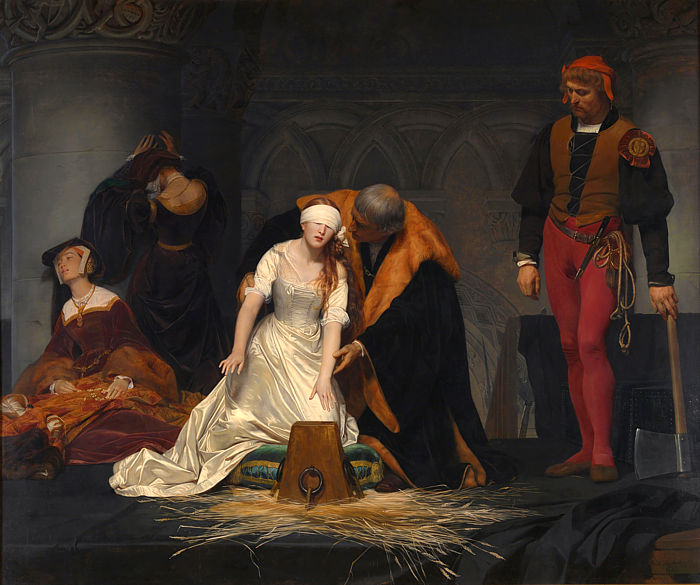
THE WORK
The Execution of Lady Jane Grey
Paul Delaroche
1833
oil on canvas
Height: 246 cm; width: 297 cm
National Gallery, London