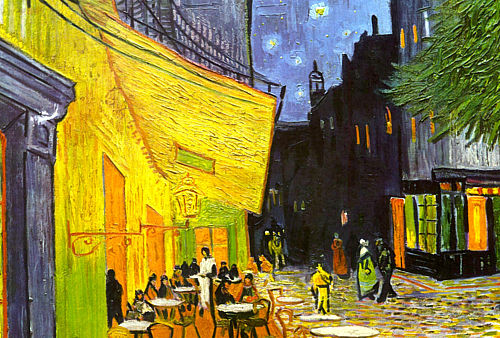


In September 1888, in a square in Arles, a man painted at night. It wasn't a casual gesture: he had forbidden himself from using black. Not a single drop. For him, darkness wasn't the absence of color, but deep blue, violet, green. The result was "Café Terrace at Night," one of Vincent van Gogh's most recognizable paintings.
But behind that technical decision lies a story rarely told alongside the painting: that of a man who had failed as a preacher and who, without fully realizing it, was still searching for the same faith he believed he had lost.
A pastor who never became one
Before becoming a painter, Van Gogh wanted to follow in his father's footsteps and become a Protestant pastor. In 1878, at twenty-five and with a career already marked by previous failures as an art dealer and teacher, he traveled to the Borinage, a mining region in southern Belgium, to work as an evangelist among the poorest miners in the area.
He threw himself into the task with an intensity that bordered on the extreme: he gave away nearly everything he owned and lived in conditions as precarious as those of the people he preached to. The miners came to call him "the Christ of the coal mines." But the Belgian evangelical church did not look kindly on that unchecked fervor, and in 1879 it decided not to renew his contract. Van Gogh, however, refused to abandon his mission and kept preaching voluntarily for several more months, until the break became final.
It was at that rock bottom, both literal and emotional, that the turning point occurred that would change art history: without a job, without recognized religious vocation, and without many alternatives, Van Gogh began to draw. There are no oil paintings from this period — he wasn't painting yet, and he also destroyed much of what he produced — but there, among miners and industrial landscapes, the artist was born.
A letter few people know about
Almost ten years later, now settled in Arles and recognized as a painter, Van Gogh returned to the subject of faith in a letter to his brother Theo, weeks after finishing "Café Terrace at Night." He confessed something that contradicts the image of a man who had broken with religion: he said he felt a terrible need — he could hardly bring himself to name it — for religion. And he added that this was why he went out at night to paint the stars.
He never returned to church. He never went back to preaching. But he never fully let go of that search either. Painting, for him, became the place where that need could be expressed without the words that had failed him as a preacher. Every star painted over the sky of Arles can be read, with that letter as context, as a prayer directed at no one in particular.
The Yellow House and the dream of a community
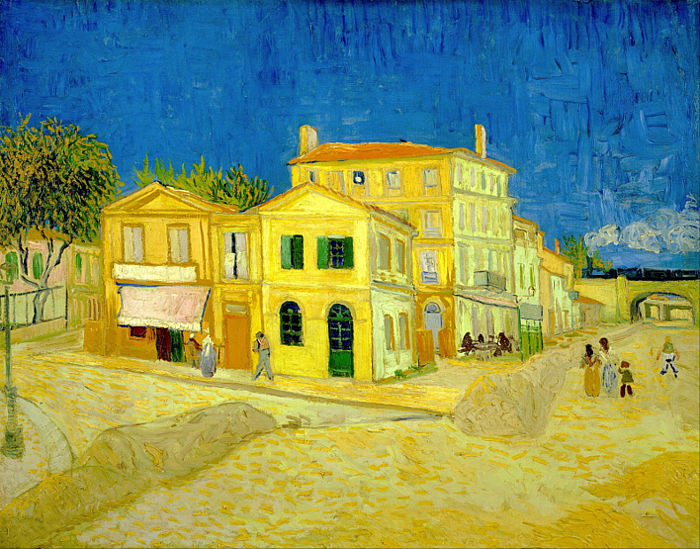
That same September of 1888, Van Gogh was living through another kind of waiting. He had rented a house in Arles — known today as the Yellow House — hoping to turn it into a shared workspace for several artists. He wrote to Theo about his dream of gathering a group of painter friends under one roof, a creative community that would offset the loneliness he felt in the south of France.
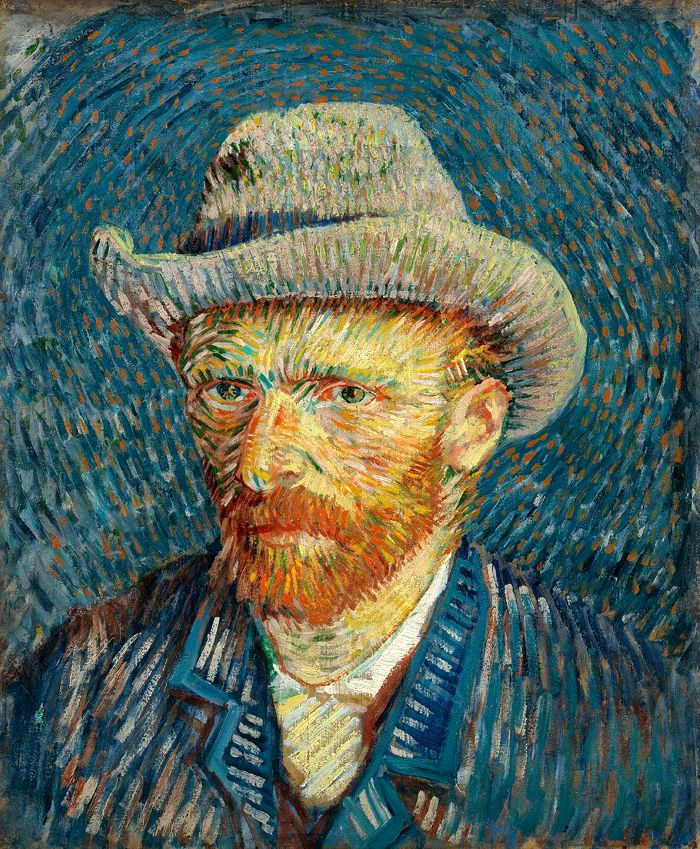
The friend he was waiting for most was Paul Gauguin, with whom he kept up an intense correspondence. As a gesture of that still-distant friendship, Van Gogh painted a self-portrait that same month and formally dedicated it to Gauguin, portraying himself with an almost monastic severity, as if he were a monk. The choice wasn't accidental: in the letters from that period, Van Gogh kept returning to ideas of renunciation, sacrifice, and a life devoted to a greater cause — direct echoes of his time as a preacher.
Gauguin finally arrived in Arles in October 1888. The time they spent living together, which Van Gogh had imagined as the beginning of an artistic brotherhood, ended just two months later in a crisis that would mark the rest of his life. But in September, when he painted the café terrace, none of that had happened yet. What existed, above all, was hope.
Three skies, the same question
"Café Terrace at Night" wasn't the only starry sky Van Gogh painted while searching for something like faith. That same September of 1888 he painted "Starry Night Over the Rhône," with the Great Bear reflected in the river's water. Almost a year later, already hospitalized at the psychiatric asylum in Saint-Rémy-de-Provence, he painted the night sky for a third time: the work known today simply as "The Starry Night," one of the most reproduced paintings in the world.
Three starry skies, painted at three very different moments in his life, united by the same underlying question: where to place a faith that no longer had a temple to live in. It's worth noting that when Van Gogh sent Theo this last version from Saint-Rémy, his brother's response was cautious: he found it too bold a stylistic departure and suggested returning to calmer subjects, like still lifes. Not even Theo, his main source of support, fully understood that work at the time.
A prayer without words
It's tempting to see "Café Terrace at Night" simply as a bright, pleasant postcard of nightlife in the south of France. And in a sense, it is: the café's yellow light, the star-scattered sky, and the overall warmth of the scene explain much of its popularity today. But knowing the context in which it was painted — the story of a man who had failed as a preacher, who privately confessed a need for religion he didn't know how to name, and who sought in painting a form of community he hadn't yet found — completely changes how the work reads.
Van Gogh never climbed back into a pulpit. But he never stopped searching for what had led him, years earlier, to the mines of Belgium: a place where his need for transcendence could make sense. That night, on that terrace in Arles, he may have found, without ever putting it in those words, a new way to pray.